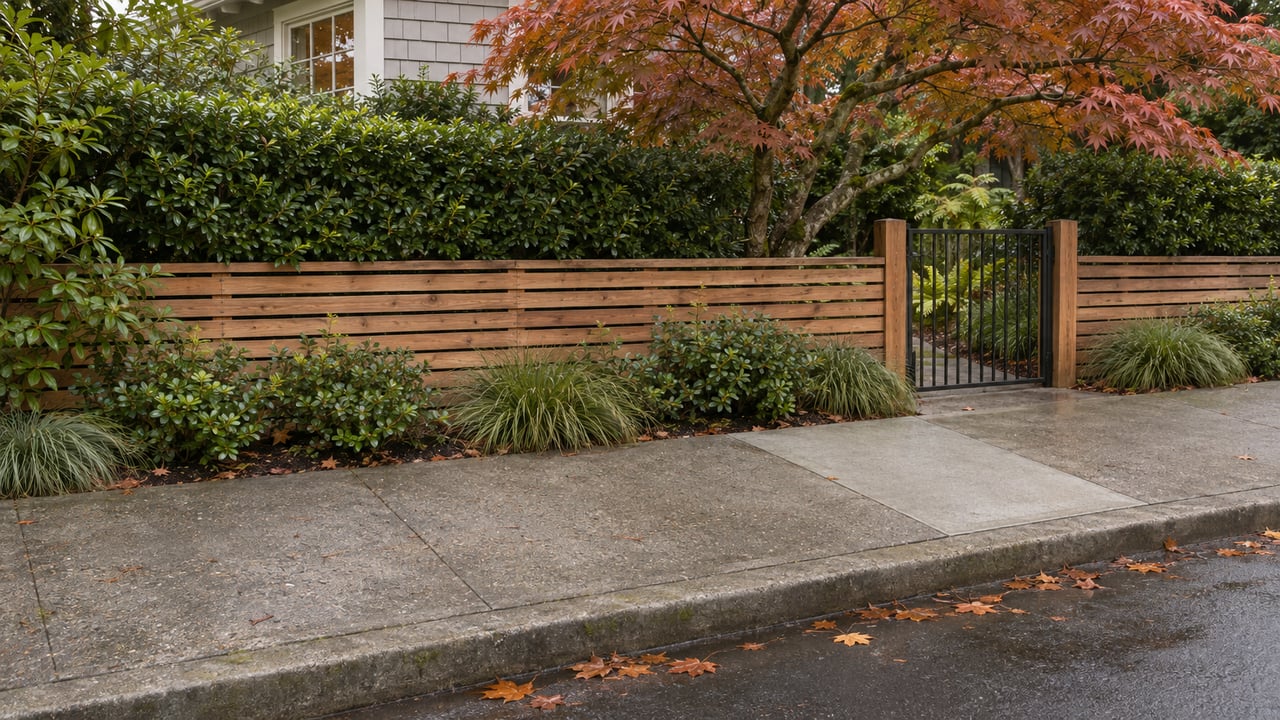
A freshly repaired sidewalk can tell you two things about a Mill Valley home. The concrete is in good shape, and the previous owner may have used some of the city’s repair assistance. Mill Valley’s cost-share pilot tracks certain reimbursements by parcel, so past use can affect how much help is available to the next owner.
That makes the sidewalk worth a look before you make an offer or put your home on the market. Walk the full frontage, then ask whether the city has issued a repair notice or reimbursed any work.
What the city pays for
Mill Valley property owners are already responsible for keeping adjacent sidewalks safe. The city’s annual maintenance program handles smaller offsets by shaving or slicing the concrete at city expense. A panel that has lifted more than about 1½ inches, or is too damaged to shave, may need replacement. Mill Valley’s annual sidewalk maintenance program
Under the cost-share pilot, the city pays half of eligible sidewalk replacement costs, up to $1,000 per property per year. That category includes eligible work on curbs and gutters integral to the sidewalk. The program has separate limits for eligible work on street trees that are damaging the sidewalk. Funding is limited and available on a first-come, first-served basis. Mill Valley’s sidewalk repair cost-share pilot
Using the $35–$50 per linear foot estimate presented to the City Council, here’s how the cap would affect a few replacement jobs. The figures illustrate concrete replacement costs before any separate tree work. August 17 City Council meeting, item 10
Sidewalk replaced | Estimated cost | City share if eligible | Owner share |
|---|---|---|---|
20 feet | $700–$1,000 | $350–$500 | $350–$500 |
40 feet | $1,400–$2,000 | $700–$1,000 | $700–$1,000 |
60 feet | $2,100–$3,000 | $1,000 | $1,100–$2,000 |
If the city sends a repair notice, the pilot generally gives an owner seeking reimbursement 30 days to submit an application with a contractor estimate and 60 days from the notice to finish the work, unless city staff agree to a different schedule. Reimbursement requires an encroachment permit and city inspections. Owners can also apply before receiving a notice. Mill Valley’s sidewalk repair cost-share pilot
Why prior repairs matter at a sale
Suppose the seller received city assistance to remove a street tree whose roots had lifted the sidewalk. The buyer gets the benefit of the completed work, and that reimbursement counts toward the parcel’s lifetime limit for eligible tree, curb, and gutter work. For residential properties, that limit is $6,000. If another repair comes up, the prior reimbursement matters when the city calculates how much assistance is available. Mill Valley’s sidewalk repair cost-share pilot
The city has also proposed a separate ordinance that would allow it, after a hearing, to assess the cost of repairs it performs when an owner fails to complete required work. If the assessment goes unpaid, it could become a lien collected through property taxes. That process is part of the proposed ordinance. Mill Valley’s draft sidewalk and tree ordinance
What to check before an offer or a listing
- Walk the full sidewalk frontage. Look for lifted panels, uneven joints, and places where roots are pushing up the concrete.
- Ask for the paperwork. Request any city repair notice, contractor estimate, encroachment permit, inspection record, or reimbursement approval.
- Check open notices with Public Works. Confirm the deadline, the work the city requires, and whether the parcel is eligible for cost sharing.
- If you’re selling, gather the records before listing. A completed repair with inspection and reimbursement records gives buyers a clear picture of what was done and what assistance the property has already received.
If you’re preparing to sell in Mill Valley, check the sidewalk early so you have time to address any repairs and gather the records before your home goes on the market.
- This post is general information, not legal, tax or financial advice. Because the ordinance is still a draft, confirm how the current rules apply to a specific property with the city's Department of Public Works and your own attorney or tax advisor.