Phillipa Criswell | Larkspur & Marin County Real Estate Specialist
Building an ADU in Larkspur, CA: Permits, Costs, and Timelines
A comprehensive homeowner guide to planning, permitting, financing, and constructing an Accessory Dwelling Unit (ADU) or JADU in Larkspur and San Rafael, California.
Building an ADU in Larkspur: 2026 Quick-Take Summary
ADU Type | Estimated Cost Range | Typical Permit & Construction Timeline |
|---|---|---|
Garage or Interior Conversion | $60,000 to $200,000 | 60-day ministerial permit review; 2 to 6 months build |
Attached Home Addition ADU | $150,000 to $350,000 | 60-day ministerial permit review; 3 to 9 months build |
Detached Stand-Alone ADU | $200,000 to $600,000+ | 60-day ministerial permit review; 4 to 12 months build |
Building an ADU in Larkspur, CA requires navigating state ministerial approval laws, municipal setbacks, and site-specific Marin County terrain rules. Yes, California state law mandates a 60-day ministerial planning review for complete ADU applications, with total construction costs ranging from $60,000 for garage conversions up to $600,000+ for detached luxury units.
Planning an ADU or Evaluating Property Potential in Larkspur or San Rafael?
Phillipa Criswell provides hyper-local market advisory to help homeowners evaluate ADU property value impact, rental revenue projections, and local municipal zoning requirements across Marin County.
Larkspur ADU Types, Permit Costs & Development Timelines Matrix
Compare cost ballparks, site constraints, and development timelines for accessory dwelling unit options in Larkspur and Marin County:
ADU Structure Type | Typical Marin Cost Range | Primary Advantages & Site Considerations | Permit & Build Duration |
|---|---|---|---|
Conversion ADU (Garage / Interior) | $60,000 to $200,000 | Lowest cost path; reuses existing footprint; minimal site disturbance | 60-day permit review; 2 to 6 months build |
Junior ADU (JADU) | $30,000 to $90,000 | Up to 500 sq ft within main house; simple efficiency kitchen; low fees | 60-day permit review; 1 to 4 months build |
Attached Addition ADU | $150,000 to $350,000 | Flexible floor plans; shares structural walls; mid-range cost and site work | 60-day permit review; 3 to 9 months build |
Detached New Structure ADU | $200,000 to $600,000+ | Maximum rental and guest privacy; standalone foundation, utilities & site work | 60-day permit review; 4 to 12 months build |
Prefab / Modular ADU | $200,000 to $400,000 (Total site & install) | Factory-built quality control; faster on-site assembly; requires crane access | 60-day permit review; 2 to 5 months site install |
Note: Cost and timeline estimates align with California Department of Housing and Community Development (HCD) standards and City of Larkspur planning guidelines.
Thinking about adding an Accessory Dwelling Unit (ADU) to your Larkspur or San Rafael property? You are not alone. Many Marin County homeowners seek extra living space for family members or steady long-term rental income. However, understanding local zoning rules, building permit fees, and construction steps is essential before breaking ground.
How California State ADU Laws Apply in Larkspur and Marin County
California state law strongly shapes local ADU approvals. Under state guidelines issued by the California Department of Housing and Community Development (HCD), cities must approve complete ADU applications ministerially without public hearings or discretionary board reviews. Planners must act on a complete submittal within a defined 60-day decision window.
The City of Larkspur enforces objective development standards, including building setbacks, height caps, and lot coverage limits. Furthermore, the Larkspur Building Division, Public Works Department, and local fire protection districts check structural, utility connection, and life-safety plans prior to permit issuance.
Key Municipal & Zoning Checkpoints Before You Design
Before commissioning architectural floor plans, confirm site-specific parcel constraints:
- State & Local Guidelines: Review state parking exemptions via California HCD ADU Guidance and verify city standards with the City of Larkspur Planning Department.
- Permit Submittals: Obtain permit forms, fee schedules, and inspection requirements directly from the City of Larkspur Building Division.
- County Policies: For parcels near city edges, review Marin County Planning policies for environmental and hillside regulations.
- Overlays & CC&Rs: Verify if your parcel lies in a historic district, steep-slope hazard zone, or creek setback corridor, and review HOA covenants.
Comparing ADU Types: Conversions, Additions, Detached & JADUs
Selecting the right ADU style depends on parcel topography, existing home footprint, and overall project budget:
- Conversion ADU: Reuses existing space such as an attached garage or basement. Offers the fastest approval and lowest construction cost.
- Junior ADU (JADU): A unit up to 500 square feet created within the primary residence, requiring an efficiency kitchen and exterior entrance.
- Attached ADU: A physical addition built onto the primary home, offering expanded living space while utilizing shared structural walls.
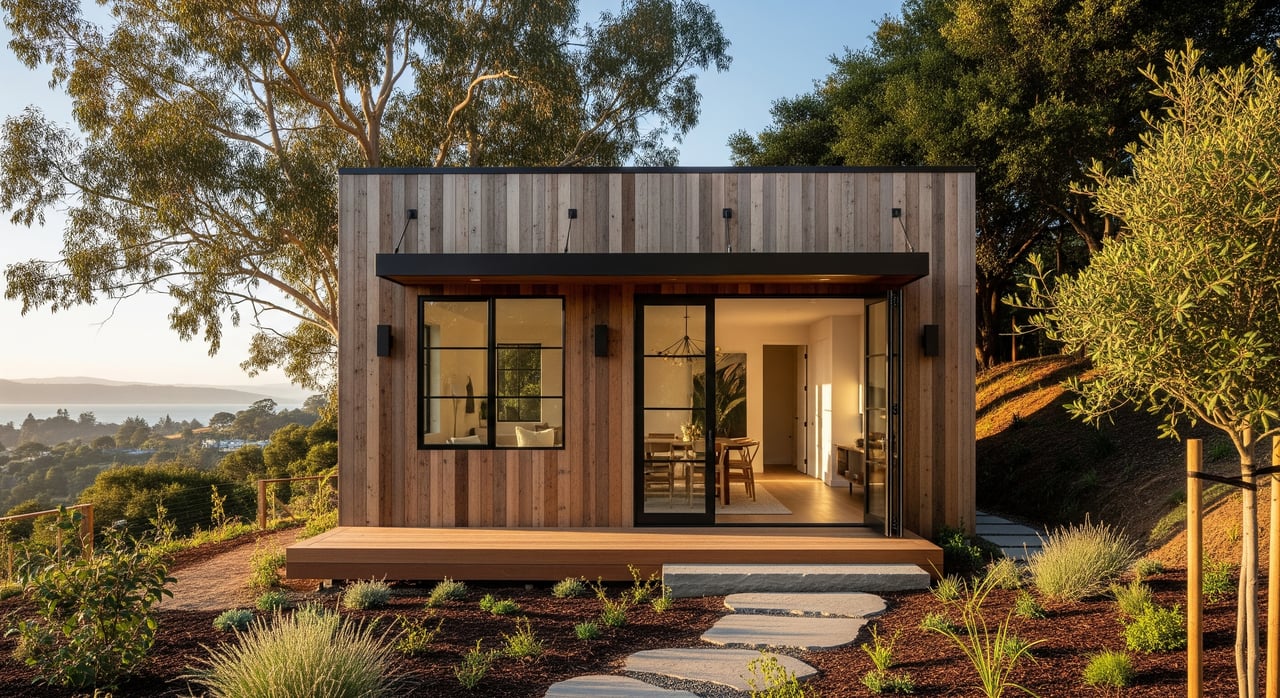
- Detached ADU: A standalone cottage providing maximum physical separation, ideal for luxury guest quarters or premium long-term rental income.
Realistic ADU Construction & Soft Costs in Marin County
Bay Area labor rates and materials reflect higher pricing than national averages. Homeowners should plan for soft costs (architectural design, structural engineering, title reports, and municipal permit fees) adding roughly 10% to 20% to the hard construction budget:
- Conversion ADUs: $60,000 to $200,000 depending on plumbing relocation and electrical upgrades.
- Attached ADU Additions: $150,000 to $350,000 based on square footage and structural tie-ins.
- Detached ADU Builds: $200,000 to $600,000+, with average custom builds landing between $250,000 and $450,000.
- Prefab / Modular Units: Factory shells cost $80,000 to $150,000, with total turn-key site work, utility connections, and crane installation running $200,000 to $400,000.
Financing Options for Accessory Dwelling Units
Marin homeowners fund ADU construction through several capital sources, including Home Equity Lines of Credit (HELOCs), cash-out refinances, renovation loans, and cash reserves. When evaluating rental income, review local long-term lease rates and check municipal short-term rental restrictions in Larkspur and San Rafael before assuming nightly Airbnb revenues.
Step-by-Step Approval Timelines and Common Delay Drivers
A typical ADU development path in Marin County spans 6 to 18 months from concept to final inspection certificate:
- Site Assessment & Feasibility (2 to 4 Weeks): Review zoning setbacks, sewer capacity, and slope parameters.
- Architectural Design & Engineering (4 to 12 Weeks): Draft construction documents conforming to objective state standards.
- Ministerial Planning Review (60 Days): City planners review complete submittals under mandatory state timelines.
- Building Plan Check & Permits (2 to 8 Weeks): Public Works, Building, and Fire departments sign off on structural and fire safety plans.
- Construction Phase (2 to 12 Months): Build duration varies from 2 months for garage conversions up to 12 months for custom detached builds.
Strategic Tips to Accelerate ADU Approvals
Avoid unnecessary permit delays by booking a pre-application review meeting with Larkspur planning and building officials. Furthermore, hire an architect experienced in Marin County ADU regulations, order geotechnical or arborist reports early for sloped or wooded parcels, and strictly align plans with local objective standards.
Your First 30-Day ADU Planning Checklist
Kickstart your project with these essential preliminary steps:
- Locate your Assessor Parcel Number (APN), zoning designation, and existing lot survey.
- Draft a preliminary sketch showing setbacks, utility meters, sewer cleanouts, and trees.
- Contact the City of Larkspur Planning Department for current ADU handouts and fee schedules.
- Consult the Larkspur Building Division to review plan check submittal requirements.
- Confirm utility connection capacity or consult Marin County Environmental Health if on a private septic system.
Phillipa Criswell | Larkspur & Marin County Real Estate Specialist
Phillipa Criswell is a premier Marin County real estate specialist with extensive personal experience building, renovating, buying, and selling homes across Larkspur, San Rafael, Belvedere, and Tiburon. Her firsthand knowledge of property valuation, ADU return on investment, and local zoning guidelines ensures homeowners make informed property decisions.
Contact Phillipa Criswell | Luxury Marin County Specialist
What Search Portals Miss About Building an ADU in Larkspur, CA
Automated real estate valuation portals like Zillow fail to reflect the true value added by a permitted ADU in Larkspur. Online algorithms lump ADUs into generic square footage calculations, ignoring how separate utility meters, independent entrances, and legal multi-generational living spaces command significant market premiums in Marin County. Working with a knowledgeable local specialist like Phillipa Criswell ensures you evaluate ADU investment potential based on true real estate market data.
Explore More Larkspur & Marin County Real Estate Guides
Discover adjacent local market guides, neighborhood breakdowns, and lifestyle insights across Marin County:
Discover Larkspur Real Estate & Home Values with Phillipa Criswell
Whether you are evaluating property ADU potential, searching for Larkspur homes with guest cottages, or planning to sell, partner with Phillipa Criswell for expert market advisory.
Frequently Asked Questions About Building an ADU in Larkspur, CA
Do I need an architect to build an ADU in Larkspur, CA?
Not always. Experienced ADU designers or draftspersons can handle straightforward garage conversions, while complex sloped lots or custom detached builds benefit from a licensed architect.
How do ADU parking requirements work in Larkspur and San Rafael?
California state law waives ADU parking requirements for garage conversions and properties located within one-half mile of public transit stops.
How long does municipal ADU permit approval take in Larkspur?
Under California state law, local planning departments must issue a ministerial approval decision within 60 days of receiving a complete ADU application.
What special requirements apply to ADUs built on sloped or wildfire-prone lots?
Sloped lots require structural engineering or geotechnical soil reports, while homes in wildfire zones must comply with WUI materials and defensible space clearing standards.
Can I rent an ADU as a short-term rental (Airbnb) in Larkspur?
Short-term rental restrictions vary by municipality. Homeowners must verify current City of Larkspur and Marin County ordinances prior to advertising nightly rentals.
How much does a detached ADU typically cost in Marin County?
Modest detached ADUs generally range from $250,000 to $450,000, with high-end custom or complex hillside builds reaching $200,000 to $600,000+ total cost.
Source: Compiled from California Department of Housing and Community Development (HCD) ADU guidelines, City of Larkspur Planning & Building Department codes, and Marin County Community Development Agency guidelines.